What are SMS marketing platforms?
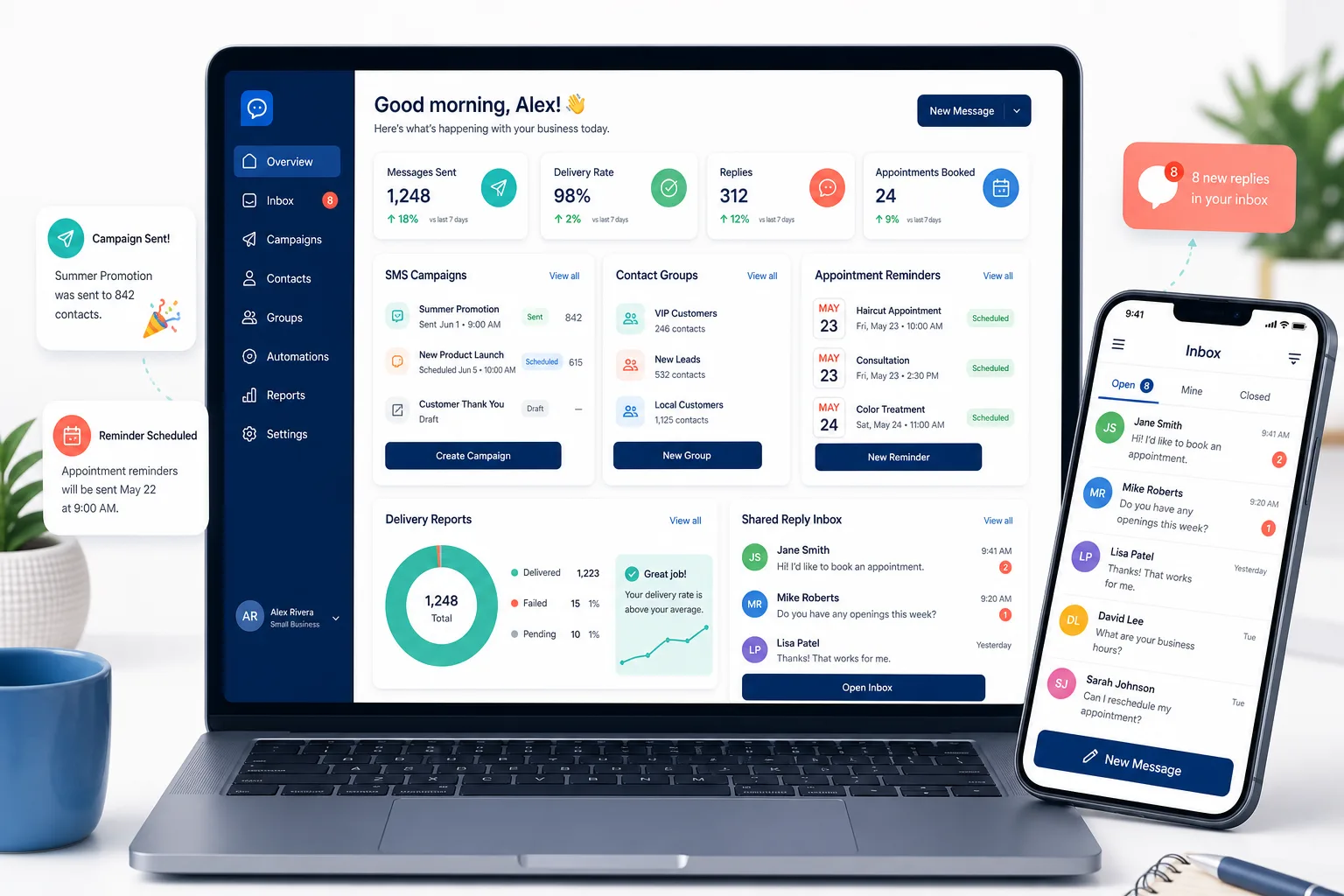
SMS marketing platforms are software tools for sending business text messages to opted-in contacts. They typically support campaign creation, contact management, scheduling, personalization, delivery tracking, and replies. More capable platforms also provide automation, appointment reminders, order updates, verification messages, and shared inboxes.
SMS marketing is permission-based customer communication by text. Messages should be useful, expected, and easy to stop. Sending unsolicited messages or ignoring regional messaging rules can damage trust and create compliance problems.
What the best SMS marketing platform should include
Campaigns and audience selection
Look for bulk SMS campaigns that let you target specific groups instead of every contact. Useful features include scheduling, reusable templates, personalization variables such as {name}, previews, CSV and Excel imports, duplicate detection, custom fields, and suppression of blacklisted contacts. Email campaigns may also be useful when a promotion needs more detail than a short text.
Automation for routine messages
SMS automation can send appointment reminders, quotation follow-ups, service updates, verification codes, and other routine messages. Check whether workflows support triggers, delays, custom fields, templates, API events, and failure handling. Automation should reduce repetitive work while allowing a human to take over when a customer replies with a question.
Two-way conversations and a shared inbox
A campaign is only half the conversation. Customers may reply with questions, rescheduling requests, or information that cannot be handled by a keyword. A two-way or unified inbox gives teams one place to read incoming messages, assign conversations, view history, receive notifications, and respond across channels such as SMS, email, and WhatsApp.
Delivery reports and queue visibility
Delivery reports should distinguish between pending, sent, delivered, and failed messages where the provider supplies those statuses. A sending queue helps explain delays and failures, which is especially important for reminders and order notifications. Transparent reporting is more useful than a blanket delivery guarantee.
How to compare SMS marketing platforms
- Ease of use: New team members should be able to import contacts, create a group, and send a test without technical help.
- Contact controls: Check groups, custom fields, duplicate handling, opt-outs, blacklists, and consent records.
- Message types: Confirm support for campaigns, reminders, transactional updates, OTP messages, and replies.
- Sending options: Look for provider APIs, sender IDs, or connected Android devices where appropriate.
- Automation: Workflows should react to appointments, orders, forms, or API events.
- Integrations: Review REST API, webhooks, OpenCart, n8n, and other workflows relevant to your business.
- Reporting: Check campaign performance, delivery status, failed messages, and queue activity.
- Support and controls: Consent records, suppression lists, rate limits, and message logs should be easy to review.
Some platforms focus on marketing teams and advanced customer data, while others are designed for straightforward business texting. Enterprise services may provide broader carrier coverage and compliance support but often require more setup and higher minimum spending. Lightweight tools may be easier to start with but lack email, order messaging, or a proper inbox.
SMS marketing pricing: what you are really paying for
SMS marketing pricing usually combines a software subscription with message-related charges. Depending on the country and platform, costs may include monthly access, per-message fees, phone number rental, sender ID registration, carrier surcharges, email delivery, or premium features.
Estimate the monthly bill using your actual volume. Account for recipients, messages per recipient, message length, destination countries, opt-out messages, test sends, failed delivery retries, and seasonal campaigns. Messages split into multiple segments or sent internationally can cost more than headline pricing suggests. Compare the total cost per delivered message rather than choosing the cheapest bulk SMS plan.
SMS marketing examples by business type
Clinics, salons, and service businesses
Send booking confirmations, appointment reminders, and follow-ups. Include the service, date, time, and a simple way to request a change.
Online stores
Order confirmations, payment updates, dispatch notifications, delivery updates, and service messages can answer questions before customers contact support. Keep promotional and operational messages separate.
Real estate teams
Use texts for viewing confirmations, lead follow-up, document reminders, and property status updates. The platform should support groups, custom fields, staff access, reply handling, and consent records.
Retail and local businesses
Permission-based offers, back-in-stock alerts, event reminders, and loyalty updates work best when they are timely and segmented by location, purchase history, or stated interest.
Software products and online services
Product teams may need OTP verification, login alerts, password resets, and account notifications. Verification flows should include sensible expiry times, retry limits, and fallback handling.
How to do SMS marketing responsibly
- Collect clear permission for the types of messages you plan to send.
- Explain who is sending the messages and how often they may arrive.
- Store consent and honor opt-out requests promptly.
- Import only contacts with a legitimate business relationship or documented permission.
- Use groups and custom fields so every message has a clear purpose.
- Keep promotional and transactional messages separate where local rules require it.
- Test links, names, dates, sender settings, and message segments before sending.
- Monitor replies, failures, and the sending queue after launch.
Rules differ by country and message type. US businesses may need to consider TCPA and carrier registration requirements, while Canadian senders should review CASL. Similar requirements exist elsewhere. A platform can provide useful controls, but it cannot determine whether your list or campaign is lawful.
Choosing a platform that fits the whole workflow
The best SMS marketing platform is one your team can operate consistently, at a sustainable cost, with controls suited to your countries and use cases. A campaign-only tool may be enough for occasional promotions, while a service business, online store, clinic, or operations team may benefit from contacts, automations, appointments, orders, OTP messaging, chat, replies, and reports in one dashboard.
Before committing, run a small test using real workflow conditions. Import a sample contact group, send a test campaign, trigger a reminder, reply from a customer account, inspect the queue, and export the report. This reveals more than a feature list and helps confirm that the platform supports both everyday messages and the conversations that follow them.